
The automotive industry has been experiencing a major digital transformation over the last decade and one of the most important technologies driving this change is telematics. Telematics in automotive systems has now become a key element of modern vehicle operation from connected cars and fleet tracking to predictive maintenance and usage-based insurance.
Telematics technology is now used by automakers, logistics companies, insurers and even everyday drivers to improve safety, efficiency, convenience and vehicle performance.
Telematics combines telecommunications and informatics and enables the real-time collection, transmission and analysis of vehicle data. Car telematics systems provide data such as location, speed, fuel consumption, engine diagnostics, driver behaviour and service requirements over cellular networks and cloud services.
This establishes a connected ecosystem where vehicles are not isolated machines but intelligent, data-driven systems that can communicate constantly.
Geotab says modern telematics solutions can help reduce fuel costs by as much as 14%, bring down maintenance costs and significantly improve fleet safety through real-time monitoring and analytics.
Table of Contents
What Is Telematics in Automotive?
Automotive telematics is the use of technology to monitor and transmit information relating to vehicles using wireless communication systems. Typically, telematics systems comprise GPS tracking, onboard diagnostics, sensors, connectivity modules and cloud-based software platforms.
Most modern telematics systems gather data directly from a vehicle’s electronic control units and onboard diagnostics port, more commonly known as the OBD-II port. The data collected is then transmitted using cellular or satellite communication to cloud servers where it can be analysed and displayed through dashboards or mobile applications.
For beginner audiences, a simple way to understand telematics is to think of it as a “smart communication bridge” between the vehicle and external systems. Instead of a car functioning independently, telematics enables the vehicle to constantly share important operational data.
Modern telematics systems can monitor:
- Vehicle location through GPS
- Fuel consumption
- Speed and acceleration
- Harsh braking behavior
- Engine health and diagnostics
- Tire pressure
- Driver behavior patterns
- Route efficiency
- Vehicle idle time
This information helps drivers and companies make better decisions while improving safety and reducing operational costs.

How Automotive Telematics Systems Work
Automotive telematics systems are based on the simultaneous operation of a number of interconnected technologies. It all starts with the sensors installed all over the vehicle. These sensors gather real-time operational data from the engine, brakes, gearbox, tires, battery systems, and other components.
A telematics control unit, or TCU for short, is a central communication hub within the vehicle. The TCU collects data from the onboard diagnostics systems and sensors. It then sends this information through cellular networks or satellite communication to cloud based servers.
Once the data is in the cloud platform, software systems analyse the information using algorithms and artificial intelligence models. This data can then be accessed by fleet managers, insurance companies, automakers or vehicle owners via mobile apps or web dashboards.
For example, if a delivery truck’s engine temperature is abnormal, the telematics system can immediately alert the fleet operator before the problem becomes a larger issue. Similarly, if a driver is prone to abrupt braking or rapid acceleration, the system can identify dangerous driving habits and suggest coaching.
Telematics systems have become more sophisticated with the advent of AI and machine learning. Today, many systems offer predictive maintenance, where the software predicts potential mechanical failures before they occur.
The Role of GPS and Connectivity in Telematics
You could argue that GPS technology is the most well-known component of automotive telematics. Global Positioning Systems enable vehicles to pinpoint their exact location in real time. This capability is particularly important for companies involved in fleet management that need precise vehicle tracking and route optimisation.
Connectivity is equally critical. Most telematics systems send data continuously over 4G or 5G cellular networks. The deployment of 5G technology is expected to significantly improve the performance of telematics by reducing latency and allowing faster communication between connected vehicles.
Embedded telematics systems are becoming increasingly common in modern vehicles. Instead of relying on aftermarket devices plugged into the OBD-II port, many automakers now integrate telematics hardware directly into the vehicle during manufacturing. Companies such as Tesla, Ford, General Motors and BMW have heavily invested in connected vehicle platforms that support telematics-based services.
Embedded telematics systems provide more reliable connectivity and deeper integration with vehicle electronics. They also support over-the-air software updates, remote diagnostics, emergency services and advanced navigation systems.
Telematics in Fleet Management
Fleet management was one of the earlier applications of automotive telematics. Commercial fleets depend on telematics to increase productivity and lower operational costs.
Telemetry enables companies to control driver actions, manage fuel consumption, reduce idle time, and optimize route planning. Logistics companies with hundreds or thousands of vehicles realize significant cost savings from tiny increases in efficiency.
Fleet telematics has been the basis of a multi-billion dollar, cloud, and AI-based business. In some fleet telematics environments, Geotab claims telematics can reduce accidents by 40% through better coaching and monitoring of drivers.
As the case of the Port of Vancouver shows, telematics technology has been very effective. The port of Vancouver implemented telematics in more than 1,500 trucks to reduce inefficiency and congestion. The telematics provided real time tracking and transparency of port operations, and allowed better management of port access and traffic flow.
Telematics is also a key technology to support compliance. Commercial trucking firms implement telematics and electronic logging devices to track driver hours and support compliance with mandatory safety requirements.
Telematics and Automotive Insurance
Of all sectors within the connected vehicle industry, insurance telematics is among the most rapidly growing. Through the use of telematics, insurance companies are able to offer usage-based insurance programs that determine driving behavior and set insurance costs according to the level of risk.
Insurers no longer need to assess risk by simply considering the driver’s age and residence. They have the capability of determining the driver’s safety. Telematics systems evaluate risky behavior by measuring the driver’s speeding, hard braking, nighttime driving, rapid acceleration and overall driving time.
Insurers using the “pay-how-you-drive” insurance system can provide lower premiums to safe drivers. Many insurance companies have found that the use of telematics provides them with an accurate and effective means of determining risk.
Insurance telematics not only allows insurance companies to more accurately determine risk, it also aids in the promotion of safe driving. The insurance telematics systems encourage safe driving by monitoring risky behavior. Many of the insurance telematics systems even reward drivers with safe driving behavior by providing scores and offering reviews and advice concerning safe driving and risk behavior.
As with most telematics systems, the collection of data and privacy are concerns of the insurance telematics system. Many of the insurance telematics systems have given the drivers an overwhelming concern and distrust with the insurance companies in regard to the collection, storage and sharing of personal data. The rapid adoption of telematics has caused a heightened concern from the government for the protection of personal data against the insurance companies, as well as a greater focus on cyber security and protection of personal data.
Connection Between Telematics and Autonomous Vehicles
The future of vehicles that drive themselves, as well as those controlled by software, will depend on telematics. More so, even the systems that aid in the driving of such vehicles would rely on telecommunications, consolidated data, and real-time data.
Such vehicles also use the telematics infrastructure to communicate with the clouds, traffic systems, and other vehicles (communication with almost everything is what V2X is short for). AI telematics process huge amounts of data from various vehicles sensors and onboard computers. These systems assist vehicles in observing road conditions, traffic, and the behavior of other drivers.
Most of the research in telematics at the moment revolves around the integration of advanced sensors and AI. Some are exploring telematics systems for machine learning that can identify profiles by analyzing their driving behavior.
Telematics will be the basis for the future of mobility services like autonomous ride-sharing and other advanced urban infrastructure. Therefore, automobile manufacturers are presently investing billions into telecommunications infrastructure.
Challenges & Risks of Automotive Telematics
Though telematics technology has a host of advantages, challenges abound are no less numerous. To the extent that vehicles have become more interconnected, so have security concerns. Hackers will undoubtedly take advantage of the vulnerabilities presented by these technologies. Vehicle data security is therefore highly important.
As vehicles become more software-defined, telematics service providers and OEMs will have to spend more on embedded encryption, more secure communication protocols and threat detection methods.
Telmatics has driving privacy issues that all consumers are still very concerned about. Telematics systems can collect some of the most intrusive and detailed information about drivers, including the times they travel to and from work, how they drive, and where they go. Many remain skeptical and cautious about the way companies use other people’s private information.
Telematics data also suffers from information overload. Telematics systems provide the most extensive information about the vehicles and other telematics communication systems connected to them. In some cases, companies process more than 100 billion data points about connected vehicles and assets each day.
Collecting and processing these massive data sets are time-consuming and require expensive cloud infrastructure and systems that use artificial intelligence to automate the analysis of these data. There are also practical challenges for implementation. Especially with large fleets, installing telematics systems can be prohibitively expensive and employees often resist the constant monitoring telematics systems represent.

The Future of Telematics in Automotive
The future of automotive telematics looks extremely promising as connected vehicle technology continues to evolve. Advancements in 5G connectivity, edge computing, artificial intelligence, and software-defined vehicles are expected to make telematics systems faster, smarter, and more integrated into everyday transportation.
Electric vehicles are also accelerating telematics adoption. EV manufacturers rely heavily on connected systems to monitor battery health, optimize charging performance, and deliver remote software updates. Companies such as Rivian, Stellantis, and Ford Pro are actively expanding telematics capabilities within their connected commercial and passenger vehicle platforms.
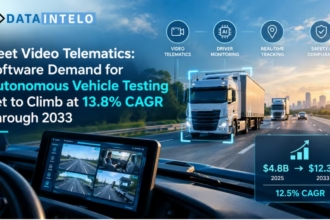
AI-powered video telematics is another rapidly growing area within the automotive industry. Modern systems now combine telematics data with AI-enabled dashcams capable of detecting distracted driving, unsafe behaviors, fatigue, and potential collision risks in real time. These technologies help improve road safety while giving fleet operators and drivers more actionable insights.
Over time, telematics is expected to move beyond basic vehicle tracking and become part of larger smart city ecosystems. Connected vehicles may eventually communicate directly with traffic lights, emergency response systems, road infrastructure, and other vehicles to improve traffic flow, reduce congestion, and enhance overall transportation safety. As connected mobility continues to expand, telematics will become an increasingly important part of modern driving and transportation systems.