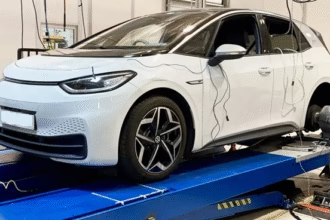
The process of vehicle testing and validation used to follow a predictable path: create a prototype, crash it, test it in a proving ground and address shortcomings. However, vehicle testing is rapidly changing. The modern automobile is not solely mechanical anymore but rather a rolling computer that needs to be validated in terms of safety, efficiency, and reliability long before it enters the roads. The application of software-based architecture, electric energy sources, and driver-assistance systems make the number of scenarios, situations and failure modes for engineers far greater, with each of them requiring proper proof.
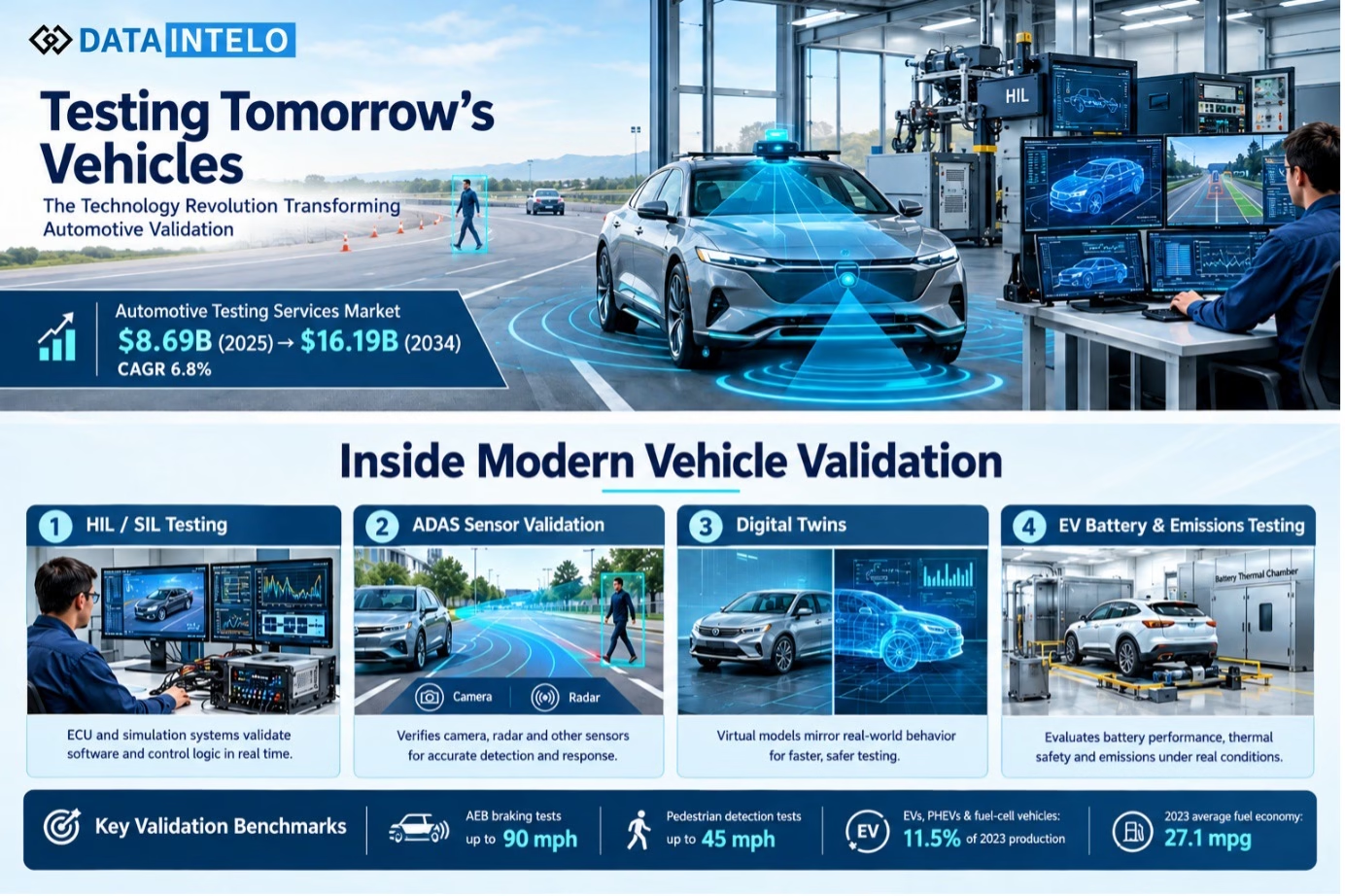
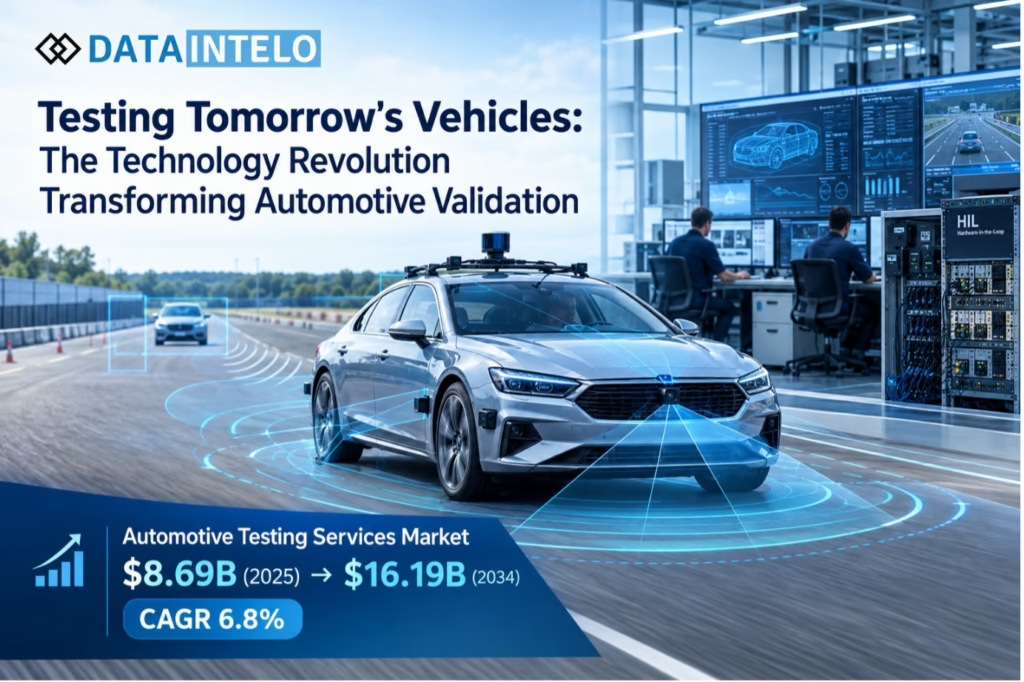
This evolution is well reflected in the market as well. The 2025 global automotive testing service market is expected to reach $8.69 billion and then grow to $16.19 billion by 2034 with a 6.8% compound annual growth rate according to Dataintelo’s research report. Those numbers demonstrate the rapid adoption of the technologies changing the approach to validation, such as simulation benched, test targets for sensors, battery chambers and data-intensive compliance work.
Table of Contents
Why the Stakes Keep Rising
According to the National Highway Traffic Safety Administration (NHTSA), the U.S. suffered 39,345 casualties in road accidents this year, as the fourth quarter marks the 11th fall in the number of deaths in a row. Though this can be seen as something positive, the authorities also indicate that the number of fatalities is much bigger than it was a decade ago. While 35 U.S. states and Puerto Rico have recorded a drop in casualties, 14 states and the District of Columbia saw an increase, which means the progress is uncertain as well. These numbers only illustrate the need of validation, which is where claims about safety can be justified or disproved.
Additionally, it should be noted that regulatory actions promote the development of testing programs. In particular, NHTSA has adopted FMVSS No. 127, whereby all passenger vehicles and light trucks should be equipped with AEB technology by 2029. According to NHTSA forecasts, the measure will allow saving at least 360 lives and avoiding 24,000 cases of injury annually. For engineers, these numbers mean they will have to create many scenarios for testing purposes and make the respective equipment comply with the given regulations.
From Test Track to Vehicle Testing Bench: HIL and SIL
Prototypes are costly and limited, so now engineers can start testing the system sooner in the development process. Software-in-the-loop (SIL) enables control code to be tested on a simulated vehicle, while hardware-in-the-loop (HIL) uses real electronic control units interfaced with a simulation that provides them with sensor information.
The FMVSS No. 127 requirements reveal the importance of this: it is necessary for the vehicle to steer clear of the lead vehicle up to 62 mph as well as to automatically brake at velocities up to 90 mph before collision. Each velocity range, surface and location becomes another test case which can be performed on the test bench without spending money on making prototypes.
Sensor Validation for Driver Assistance
Modern assistance features are reliant on cameras, radar, and in some cases, lidar, and the operation of each of them under rain, glowing light, and darkness is distinct. The pedestrian criterion embedded in the FMVSS No. 127 shows that detection must be confirmed at two different light sources. This regulation lays down the conditions in which a car is expected to brake automatically when a pedestrian is detected at speeds of up to 45 mph. In order to comply with the requirements, testing labs use pedestrian target dummies, which are placed on rails guided platforms.
Digital Twins and Virtual Proving Grounds
A digital twin is a software model of the car, its sensors, and the surrounding environment that is calibrated through real-world tests. In Vehicle testing, scenario libraries for these models are based on recorded crash data, including information from the NHTSA Fatality Analysis Reporting System, which also provided data for NHTSA’s final report on 2023 crashes and its estimates for 2024. NHTSA reported a fatality rate of 1.18 per 100 million miles driven during the first nine months of 2024, down from 1.24 for the same period in 2023.
Such a low rate means dangerous events during a trip are relatively rare. Simulation therefore allows engineers to reproduce these scenarios repeatedly without waiting for them to occur on the road.
Keeping Simulation Honest in Vehicle Testing
Simulation works as long as it reflects reality. If engineers want to compare simulated brake traces with brake traces measured during vehicle testing at 62 mph and 45 mph on the track, they trust the model only for the sections where the two curves match closely. In cases of disagreement, the model is further adjusted before being used to implement any physical test, ensuring that the virtual evidence remains substantiable during audits. Is this important for understanding how many fatalities are prevented each year through braking standards?
Electrified Powertrains Change the Lab
According to the Environmental Protection Agency (EPA), the production of electric vehicles, plug-in hybrid vehicles, and fuel cell vehicles made up 11.5% in 2023 compared to the 6.7% production in 2022. The EPA believes that this number will go even higher and reaches up to 14.8% in 2024. Thus, there is an increase of 4.8%, and there will be an increase of 3.3% more. Testing facilities needed to install devices for charging battery packs that operate well at normal temperature but behave differently during several fast-charging processes.
Emissions and Efficiency Still Need Precision
The advent of electrification has not rendered traditional methods of measurement useless. Indeed, the EPA has determined that vehicles from 2023 achieved a historic average fuel economy of 27.1 miles per gallon, representing an increase of 1.1 miles per gallon compared to 2022. During this same time frame, real world CO2 emissions were recorded at 319 grams per driving mile, also marking a remarkable low. Vehicle testing continues to play an important role in measuring these improvements and validating vehicle efficiency.
Between 2004 and 2023, CO2 emissions fell by 31%, or 142 grams per driving mile, while fuel economy increased by 40%, or 7.8 miles per gallon. The EPA has concluded that electrified motor vehicles have reduced CO2 emissions by 38 grams per mile and improved fuel economy by 2.2 miles per gallon.
Where Technology Meets Vehicle Testing Method
The table below connects each validation area with the tools used and the official figure that shapes it.
| Test area | Main technology | Official data point |
| Emergency braking | HIL benches, scenario simulation | Automatic braking up to 90 mph (NHTSA) |
| Pedestrian detection | Guided soft targets, low-light trials | Braking up to 45 mph (NHTSA) |
| Electrified powertrains | Battery cyclers, thermal chambers | 11.5% of model year 2023 production (EPA) |
| Emissions and efficiency | Chassis dynamometers | 319 grams of CO2 per mile (EPA) |
What Validation Teams Should Prepare For
Several organizations are likely to revise parts of their testing processes by 2029. Some of the priorities derived from previous data include:
- Conduct lead vehicle tests at speeds up to 62 mph and automatic braking tests at speeds up to 90 mph.
- Conduct pedestrian detection tests under two light conditions, with braking tests at speeds up to 45 mph.
- Estimate battery and charging performances for the share of the market to grow from 11.5% to 14.8%.
- Keep emissions baselines in readiness, as in 2023, the average emissions of cars operating were 319 grams of CO2 per mile.
- Connect simulation results with the actual driving data, so every test that was performed virtually could be replicated.
Timing is also quite significant. By October 2026, there is less than three years left to meet the deadline in September 2029, which means that any new platform has to go through a number of tests before the product can be approved. NHTSA claims that the majority of new automobiles already have AEB. Thus, many cars and light trucks can comply with requirements prior to the deadline.
It is crucial to pay as much attention to how data is treated as to the technological aspects involved. If one experiment related to braking is carried out under different conditions in terms of speed or surface, it will create various logs that should be linked to a specific version of the software used in this experiment. Hence, companies that view the current situation as a data engineering issue rather than a mechanical problem will contribute to the early detection of failures.
Looking Ahead: Validation in the Next Decade
The process of vehicle testing is becoming a fusion of hardware measures and software evidence. Counting statistics tells us a story that is always the same: in 2024 there are 39,345 deaths showing that there is still work to be done, a 360-life annual achievement made possible by a quick brake underlines the importance of good validation, and a 14.8% predicted amount of electrical vehicles speaks of the fast widening of the testing agenda.
The surge of the market of $16.19 billion till the year 2034 is just a commercial impression of the workload. Trustful laboratories will be the ones implementing a combination of computer simulations, physical testing devices, and clear data and which constantly ask themselves what has not been checked in their tests before the release.